Creating Ownership and Accountability
One of the most persistent problems in project management isn't a scheduling problem at all — it's an ownership problem. When the people doing the work don't feel ownership over the plan, no amount of tracking, status meetings, or escalation will close the gap. Real accountability isn't imposed from the outside. It's created during planning.
The Flaw of Project-Manager Planning
In most organizations, the project manager builds the schedule. They gather some inputs — maybe a few emails, a couple of hallway conversations — and then disappear into MS Project or a spreadsheet to assemble the plan. The team sees the finished product at a kickoff meeting, often for the first time.
This is project-manager planning, and it's deeply flawed — not because the PM lacks skill, but because the process itself undermines everything that comes after.
When one person builds the plan in isolation, several things happen. Task durations reflect the PM's assumptions, not the team's real understanding of the work. Dependencies get missed because no single person holds the full picture. And most critically, the team receives a plan they had no hand in shaping. They'll comply with it — they may even nod along in the kickoff — but they won't own it.
The plan becomes the PM's plan, not our plan. And when things get difficult (they always do), people default to protecting their own work rather than protecting the project. That's not a character flaw. It's a perfectly rational response to being handed a schedule you didn't help create.
Create a Team Mentality
Ownership doesn't come from a motivational speech or a team-building exercise. It comes from involvement. When the team builds the plan together — debating task sequences, identifying risks, negotiating handoffs — something shifts. The plan stops being an external constraint and starts being a shared commitment.
This is what collaborative planning looks like in practice. You get the right people in a room (or on a call), and you build the network of tasks together. Not the PM presenting a draft for feedback — that's still PM planning with a coat of paint. Real collaborative planning means the team is constructing the logic of the project from the ground up.
The shift in language tells the story. Teams that plan together say "we" instead of "they." They say "our deadline" instead of "the deadline." This isn't semantics. It reflects a fundamentally different relationship with the plan. When someone helped decide that Task B follows Task A, they understand why — and they're far more likely to flag it early when something threatens that sequence.
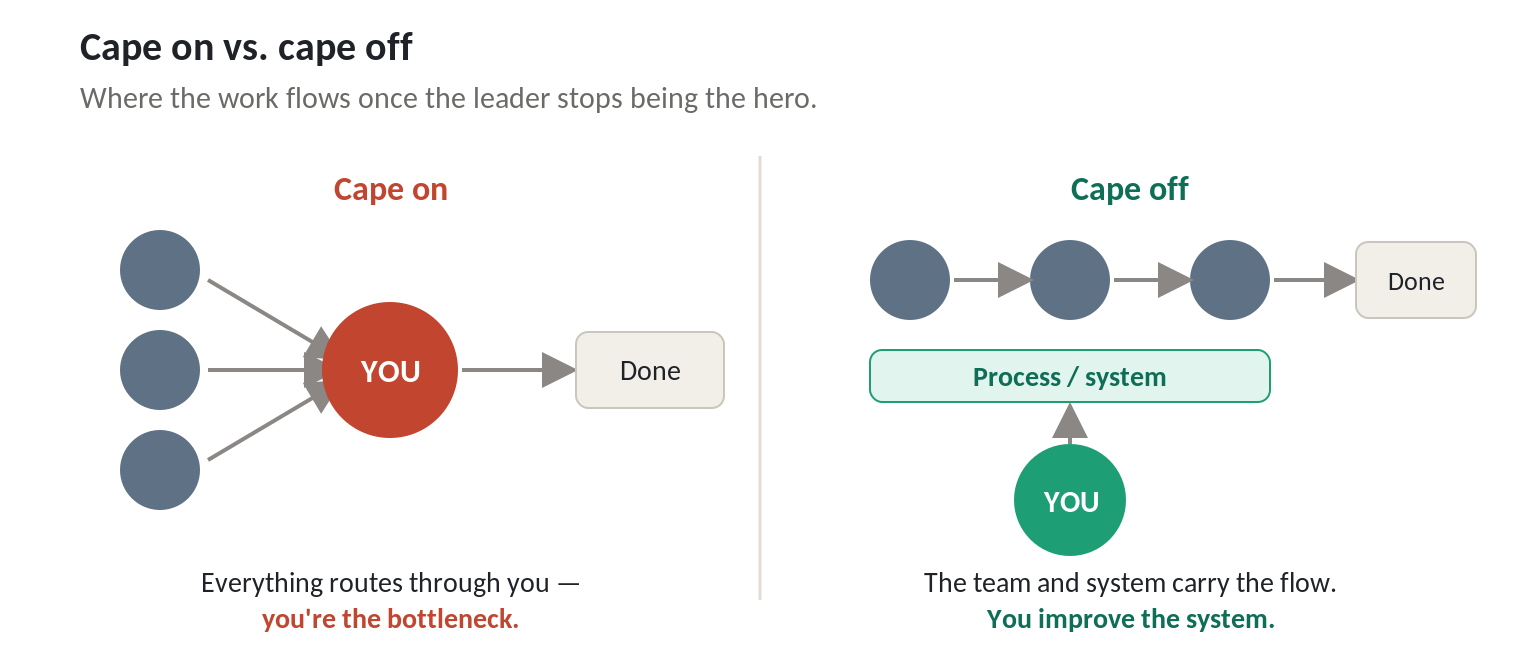
A team mentality also changes how people handle the inevitable surprises. Instead of waiting for the PM to re-plan, team members start problem-solving laterally — talking directly to the people upstream and downstream of their work. The PM shifts from being the central dispatcher of all information to being a facilitator of a team that largely manages its own flow.
People Will Do More for Commitments They Make Themselves
There's a simple truth at the heart of all this: people will do more to honor a commitment they made themselves than one that was made for them.
When a team member says "I can do this in five days," that statement carries weight — to them. It's their professional judgment, offered in front of their peers. Compare that to a PM assigning a five-day duration in a scheduling tool. The number might be identical, but the psychological contract is completely different.
This is why collaborative planning isn't just a feel-good exercise. It's a performance strategy. Self-made commitments activate a sense of professional pride and peer accountability that no tracking system can replicate. People will push harder, get more creative about removing obstacles, and communicate earlier about problems — because the commitment is theirs.
The flip side is also true. When durations are assigned without input, people treat them as someone else's guess. If the task runs long, the mental framing is "the estimate was wrong" — not "I'm behind on my commitment." The locus of responsibility shifts entirely, and with it goes any intrinsic motivation to recover.
This doesn't mean you let the team sandbag their estimates. Collaborative planning includes healthy challenge — peers pushing back on durations that seem inflated, the PM asking probing questions. But the final commitment comes from the person doing the work, and that makes all the difference.
Create Accountability at Planning
If you want accountability during execution, you have to build it into the planning process — not bolt it on afterward.
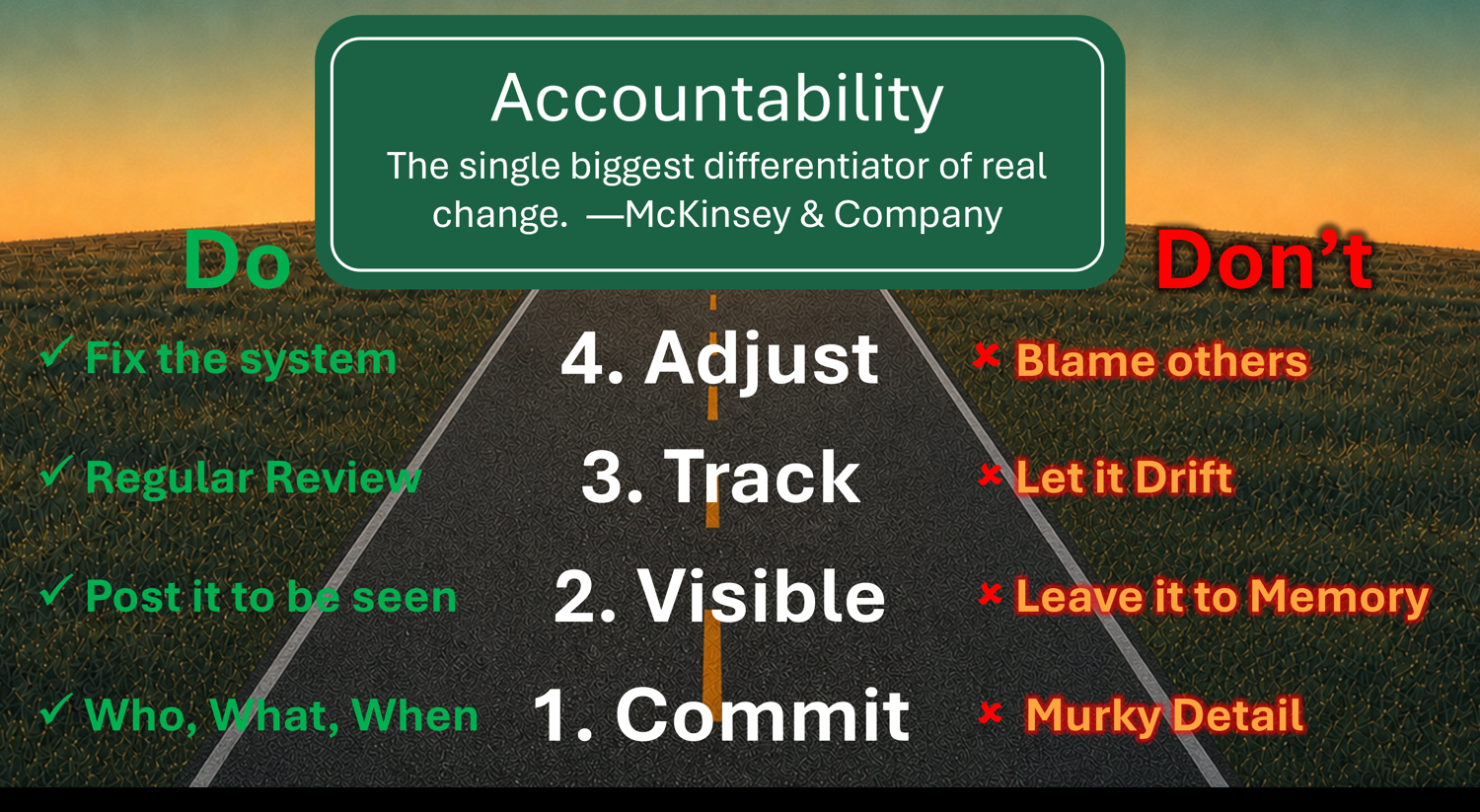
In practice, this means several things. Every task has a single owner, identified during planning, who publicly commits to the duration and the handoff. The team discusses dependencies together so that everyone understands who they're depending on and who's depending on them. And the aggressive-but-possible durations that come out of collaborative planning are explicitly framed as commitments, not targets or guesses.
This is where the relay-race mentality of Visual Project Management comes into play. When a runner takes the baton, they don't jog — they sprint. Not because someone told them to, but because the team is counting on them and they know it. Collaborative planning creates exactly this dynamic. Each person knows their leg of the race, knows who's handing off to them, and knows who's waiting for their output.
Accountability created at planning also gives the PM a fundamentally different tool for managing execution. Instead of chasing people with status requests, the PM can have honest conversations grounded in the team member's own commitment. "You said five days — we're at day four and it looks like there's still significant work remaining. What do you need?" That's a very different conversation than "the schedule says you should be done tomorrow."
The goal isn't to create pressure. It's to create clarity. When commitments are made openly, in the context of the full project network, everyone can see how their piece fits. That visibility — combined with the personal ownership of having made the commitment yourself — is the most powerful accountability mechanism available to a project team.
The Planning Event
All of this comes to life in a specific event — the collaborative planning session. This isn't a kickoff meeting where the PM presents slides. It's a working session where the team builds the schedule together. Getting the format right matters enormously, because a poorly run planning session can undermine the very ownership you're trying to create.
Who's in the Room
Start with all the core team leaders — every person who owns a meaningful stream of work on the project. If someone's function touches the critical path or has significant dependencies with other teams, they need to be there. This isn't a spectator event. You want the people who can make commitments on behalf of their teams and who understand the technical realities of the work. Missing a key voice means you'll have gaps in the plan that surface later as surprises — exactly the kind of thing collaborative planning is supposed to prevent.
In-Person Planning
For complex projects — anything involving more than a handful of people running six to nine months or longer — do this in person. There is no substitute.
Expect to invest two to two-and-a-half days. Get a conference room with plenty of open wall space, and buy more sticky notes than you think you'll need. The format is simple: tasks go on stickies, stickies go on the wall, and the team arranges them into the logical flow of the project. The entire network gets laid out physically so everyone can see the full picture of what they're committing to.
What happens over those two days is where the magic lives. Dozens of discussion points surface organically as people see their work in context with everyone else's. Someone looks at a six-week task upstream of their work and says, "If that's going to take six weeks, can you give me basic functionality at three weeks so I can start integrating?" Someone else pushes back: "We need more time on that — it's going to take five weeks because we have to integrate into the MRP before we can start." A veteran on the team points at a duration estimate and says, "Last time we did that, it took eight weeks. Why are we now saying twelve?" These conversations are the point. They're how the schedule becomes both comprehensive and realistic — not through one person's best guess, but through the collective intelligence of the team.
Sticky notes are a deceptively powerful tool here. Everyone can write tasks, move them, challenge their placement, and redraw dependencies. When the session is over, every person in the room can see their fingerprints on the schedule. That physical participation is what converts a plan from "something I was told" into "something I helped build." The schedule evolves over the course of those days — messy at first, increasingly structured, and by the end, something the team genuinely believes in.
Virtual Planning
If an in-person session isn't feasible, you can achieve something similar using PowerPoint or a virtual whiteboard tool. It won't generate quite the same level of engagement as a room full of sticky notes, but it's good enough for simpler projects and far better than PM-only planning.
The key difference in virtual format is pacing. Don't try to replicate a two-day marathon over video — dragging people through four- or six-hour video sessions is so painful that you'll lose the very engagement you're trying to create. Instead, meet for sixty to ninety minutes per session, every day or two, until the schedule is complete. It might take a week or two of short sessions, but you'll get far better participation and thinking from people who aren't burned out by a screen.
A few non-negotiable ground rules for virtual planning: ask for full attention during sessions (no multitasking), and require cameras on. This isn't about surveillance — it's about accountability to teammates. When people can see each other's faces, they engage differently. They're more likely to speak up, challenge an assumption, or offer a creative alternative. Cameras off is a license to disengage, and disengaged planning produces the same low-ownership outcomes as PM planning.
Schedule Compression
Once the team has built their initial schedule, there's a good chance it doesn't land where stakeholders need it. Maybe the project comes in two months longer than the target. This is where many PMs make a critical mistake: they go back to their desk, shave durations, remove slack, and present a "revised" schedule that hits the date. Ownership destroyed in one stroke.
Schedule compression is a team activity — full stop. If you force the plan to meet the boss's requirements, you'll lose every ounce of ownership the team just built. Instead, bring the gap back to the team and let them work the problem. Encourage people to suggest alternatives beyond simply cramming the same work into a smaller time window. Can we reduce functionality and still meet the core requirements? Can we bring in help from another team or a consultant to run work streams in parallel? Are there tasks that can be split to allow multiple handoff steps, letting downstream work start earlier? Are there nice-to-haves that the team agrees can be eliminated without compromising the deliverable?
When you open up this negotiation, teams consistently find opportunities to compress that the PM alone would never have seen. They know where the real fat is. They know which tasks have hard constraints and which have soft ones. And because they're the ones proposing the changes, the revised commitments carry the same weight as the original ones. The compressed schedule is still their schedule — just a tighter version of it that they believe is achievable.
"More than any policy or system, there is nothing like the fear of letting down respected teammates that motivates people to improve their performance." — Patrick Lencioni